
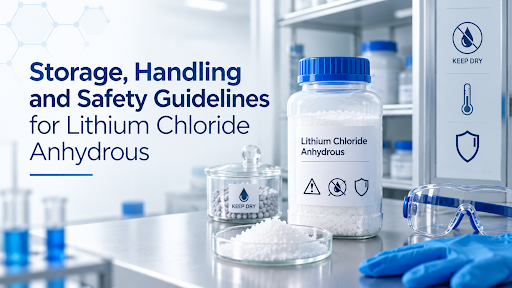
Lithium-based compounds are widely used across research, chemical synthesis, and advanced material applications. However, their safe use depends on proper storage and handling practices. Lithium chloride anhydrous is a white crystalline powder that readily absorbs moisture from the atmosphere, making appropriate storage conditions particularly important. Understanding its physical properties, potential hazards, and handling requirements can help laboratories maintain product quality while reducing unnecessary risks during use.
At Azaricta Research Labs, lithium chloride is supplied as a high-purity material for research use. The product is identified by CAS number 7447-41-8 and is available in different pack sizes to support varying research and laboratory requirements. As with all laboratory chemicals, users should review the relevant product documentation and Safety Data Sheet (SDS) before beginning any work.
Understanding the Material Before Use
Lithium chloride is an inorganic compound with the chemical formula LiCl. In its anhydrous form, it is highly hygroscopic, meaning that it can absorb moisture from the surrounding environment. This characteristic can affect the material's condition and suitability for applications where controlled composition or moisture levels are important.
The material is soluble in water and is supplied as a solid powder. According to the product information provided by Azaricta Research Labs, the recommended storage temperature is around 25°C, and exposure to moisture, excessive heat, and light should be avoided.
Before opening a container, laboratory personnel should confirm the product identity, check the label, and inspect the packaging for any visible signs of damage. The appropriate SDS and product documentation should also be available to personnel working with the material.
Maintaining Proper Storage Conditions
Correct storage plays an important role in preserving the quality of moisture-sensitive chemical materials. Since lithium chloride readily absorbs moisture, exposure to humid air should be minimised during both storage and routine handling.
The following practices can help maintain suitable storage conditions:
- Keep the container tightly closed when the material is not in use.
- Store the product under an inert atmosphere where required for the application or storage procedure.
- Maintain the recommended storage temperature of approximately 25°C.
- Protect the container from unnecessary exposure to moisture, heat and light.
- Use the original compatible packaging whenever possible.
- Clearly label all containers, including secondary containers used during laboratory work.
- Store chemicals in a designated area that is accessible only to trained personnel.
Azaricta Research Labs specifies HDPE containers or glass bottles for its product packaging. These containers should be kept properly sealed to reduce contact with atmospheric moisture. Repeated and prolonged exposure to humid conditions may affect the material, so laboratories should plan their dispensing procedures to minimise the time the original container remains open.
Safe Practices During Chemical Handling
Effective chemical handling begins with preparation. Before working with any chemical powder, personnel should understand the relevant hazards and establish suitable controls for the specific task.
When handling moisture-sensitive powders, avoid creating unnecessary dust or allowing the material to disperse into the surrounding workspace. Where appropriate, work should be performed in a suitably ventilated laboratory area. The work surface should also be clean and prepared before the container is opened.
Good handling practices include:
- Reading the product label and SDS before use.
- Wearing appropriate personal protective equipment.
- Using suitable tools for transferring or measuring the material.
- Keeping food and beverages away from chemical work areas.
- Avoiding direct contact with the skin and eyes.
- Preventing the formation and inhalation of dust.
- Closing the container immediately after removing the required quantity.
- Cleaning the work area according to established laboratory procedures after use.
These basic measures help support a more controlled working environment and reduce the risk of accidental exposure.
Personal Protective Equipment and Ventilation
Personal protective equipment should be selected according to the nature of the task and the information provided in the relevant Safety Data Sheet. Because lithium chloride can cause skin and eye irritation and may be harmful if inhaled or ingested, suitable protective measures are important during routine laboratory operations.
Depending on the activity being performed, appropriate PPE may include protective gloves, safety goggles and suitable laboratory clothing. Eye protection is particularly important when transferring or preparing chemical materials, as accidental splashes or airborne particles can cause exposure.
Adequate ventilation should also be maintained when working with powders. Procedures that could generate dust may require additional engineering controls based on the scale and nature of the operation. Laboratories should follow their established risk assessment procedures when determining the appropriate level of respiratory or ventilation protection.
Responding to Accidental Exposure and Spills
Laboratories should have clear procedures for responding to accidental chemical exposure or spills. Personnel should not attempt to manage an incident without understanding the relevant safety procedures.
In the event of a spill, unnecessary personnel should be kept away from the affected area. The spill should be managed using appropriate protective equipment and established laboratory protocols. Avoid actions that could unnecessarily spread powder or generate airborne dust.
If the material comes into contact with the eyes or skin, the affected area should be treated promptly according to the instructions provided in the applicable SDS and local laboratory emergency procedures. Similarly, any suspected inhalation or ingestion exposure should receive appropriate medical attention.
Emergency equipment, such as eyewash stations and safety showers where required, should remain accessible and regularly maintained within laboratory environments.
Disposal Requires a Controlled Approach
Chemical waste should never be disposed of casually or mixed with general waste without proper evaluation. Disposal requirements may vary depending on the quantity of material, local regulations, and other substances involved in the laboratory process.
Unused or contaminated material should be collected in suitable, properly labelled waste containers. Laboratories should follow applicable institutional and local regulations when arranging chemical waste disposal.
It is also important to avoid mixing chemical waste streams unless compatibility has been assessed. Proper segregation, labelling and documentation can help prevent unsafe reactions and support compliant waste management practices.
Documentation and Training Matter
Safe storage and handling are not limited to the physical management of a chemical. Proper documentation and personnel training are equally important. Laboratory staff should understand the hazards associated with the materials they use and know how to respond appropriately in routine and emergencies.
Useful documentation may include:
- Safety Data Sheets
- Product specifications
- Certificates of Analysis, where applicable
- Laboratory risk assessments
- Standard operating procedures
- Chemical inventory records
Regular training can help personnel understand changes in procedures and reinforce safe working practices. This is especially important when handling research materials that have specific storage or environmental requirements.
A Responsible Approach to Chemical Supply and Use
The safe use of lithium chloride anhydrous begins with obtaining the right material and following appropriate storage, handling and safety procedures throughout its lifecycle. Maintaining a dry, controlled storage environment, using suitable PPE, minimising dust exposure and following SDS guidance can help laboratories work with the material more responsibly. For researchers seeking high-quality laboratory chemicals and specialised materials for research applications, Azaricta Labs is the best option to opt for, offering a broad range of chemistry solutions along with product information and supporting documentation to help users make informed decisions.